
City Hall Scoop

South Pasadena News and Updates

June 15 Reopening

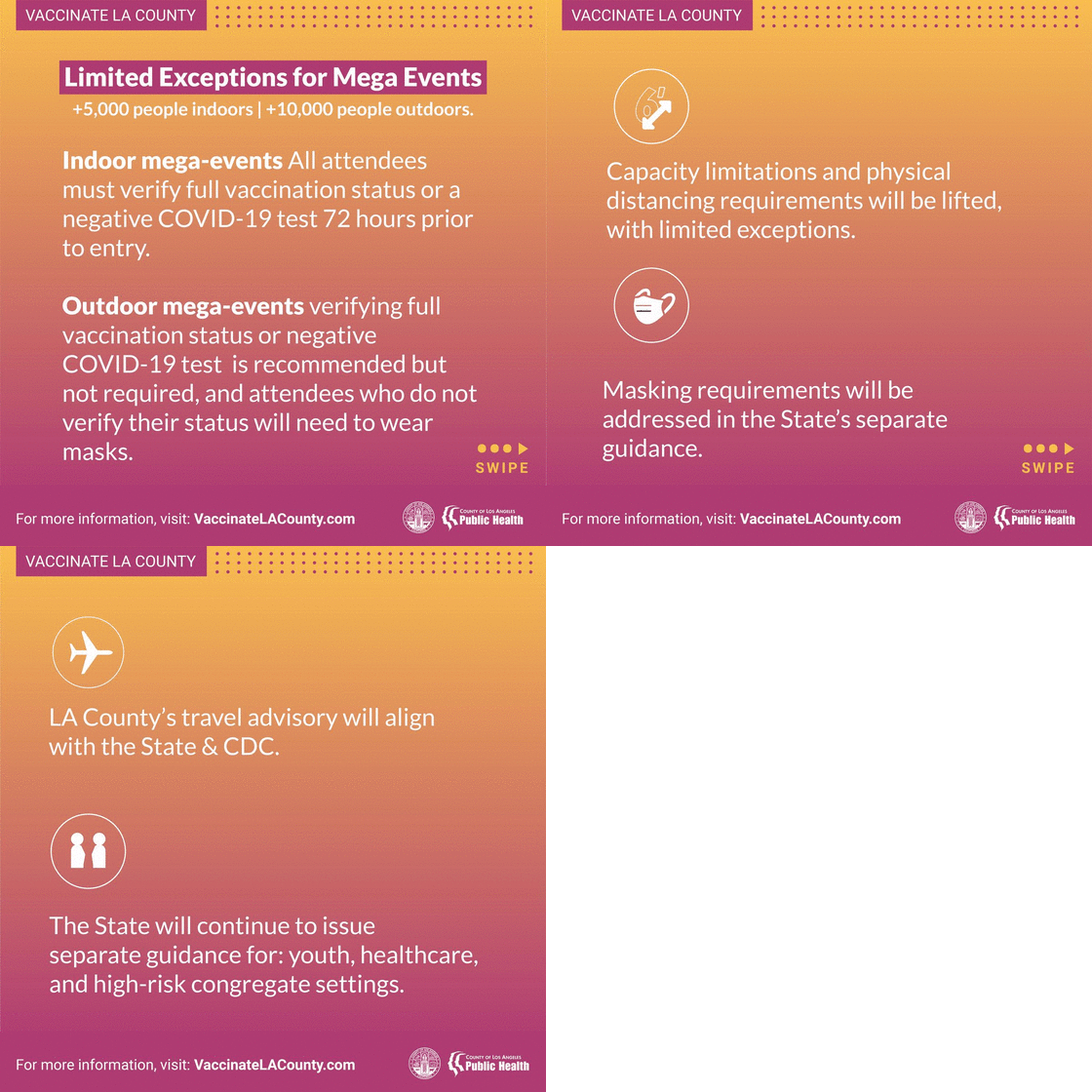
Beginning June 15, almost all sectors and businesses in L.A. County will be able to return to usual operations with some limited exceptions. 

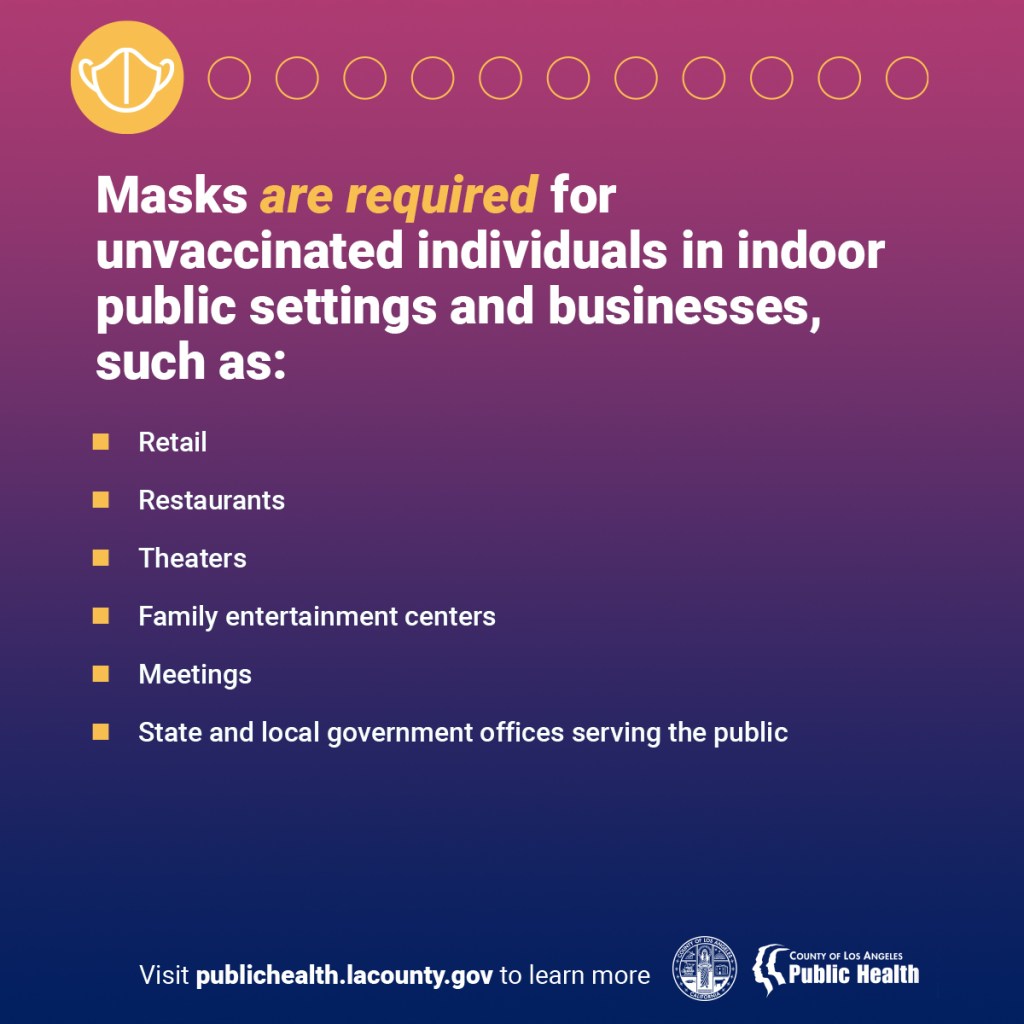
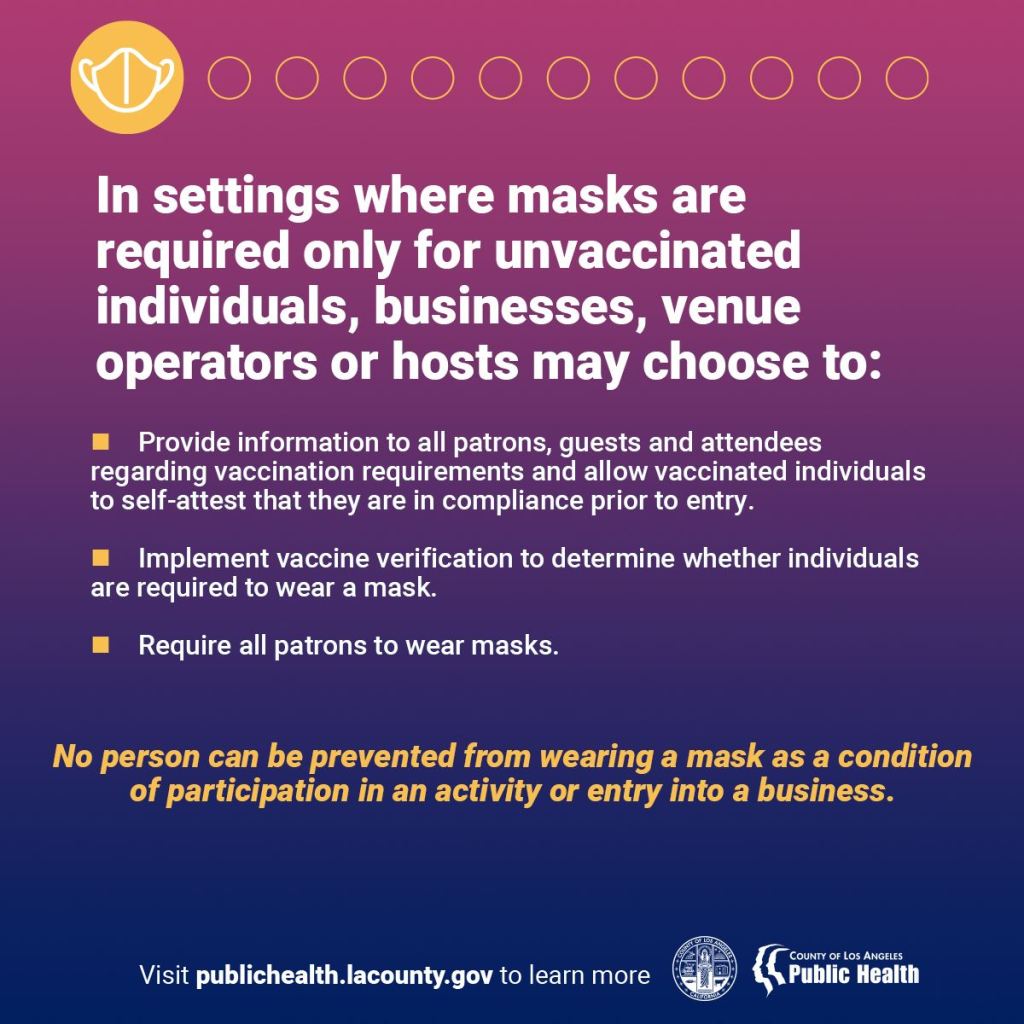
One exception is for mega-events, which are defined as large crowds greater than 5,000 people if indoors, or 10,000 people if outdoors. Regardless of whether these events have assigned seating or not, and whether they are general admission or ticketed, they are considered higher risk for COVID-19 transmission. This is because they involve attendees spending extensive time physically close to people from outside their households and potentially, from outside the state. For that reason, indoor mega events are required to verify either full vaccination status or a negative COVID-19 test within 72 hours pre-entry for all attendees. Participants must also follow the state’s mask guidance at these events.

For outdoor mega-events, the same guidance on verifying the vaccination or test status of attendees is offered as a strong recommendation rather than a requirement, and attendees who do not verify their status will need to wear masks.

The state will continue to issue separate guidance to be followed for youth, schools and daycares, healthcare, and high-risk congregate settings. In other settings, on June 15, capacity limitations and physical distancing requirements will be lifted. 

For more information visit publichealth.lacounty.gov.

6/16/21

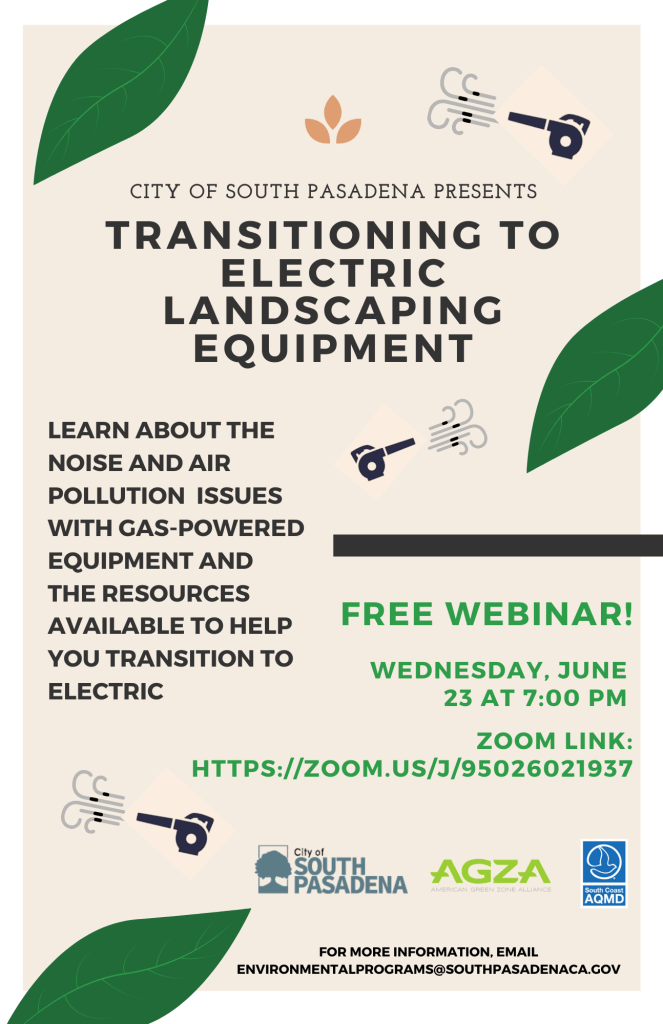
Ditch that noisy, polluting, gas-powered leaf blower and come learn how to transition to low-noise, zero-emission electric landscaping equipment! The City of South Pasadena, in partnership with the American Green Zone Alliance (AGZA), will be hosting a free Zoom webinar, “Transitioning to Electric Landscaping Equipment,” on June 23, 2021 at 7pm. Residents can learn how to transition from gas powered landscaping equipment, such as leaf blowers, to electric powered equipment. AGZA will discuss the air and noise pollution issues with gas powered equipment, the electric equipment that is currently available, and the cost comparison between gas and electric. Residents will have the opportunity to ask questions and learn more about the City’s plans to prohibit the use of gas powered leaf blowers. Join the Zoom Webinar via link: https://zoom.us/j/95026021937 or Meeting ID: 950 2602 1937.

6/15/2021

.

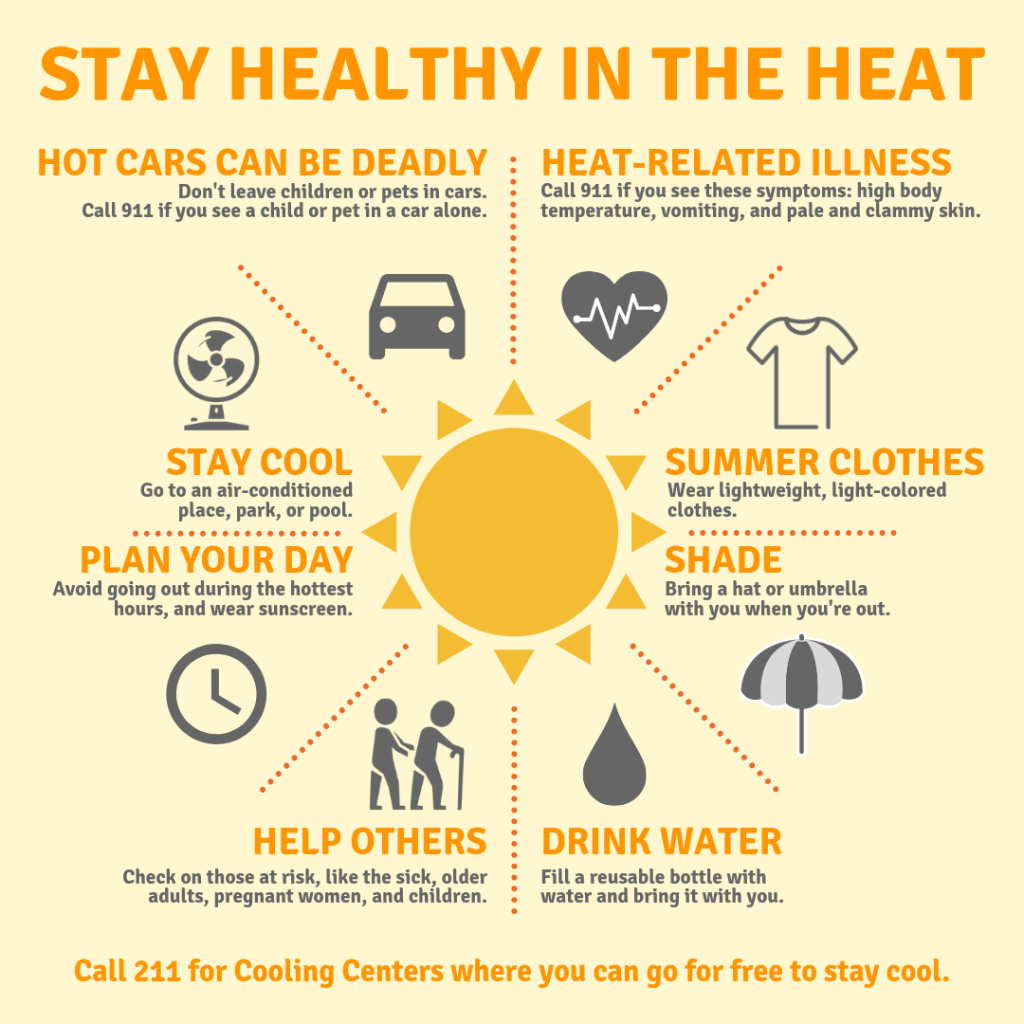
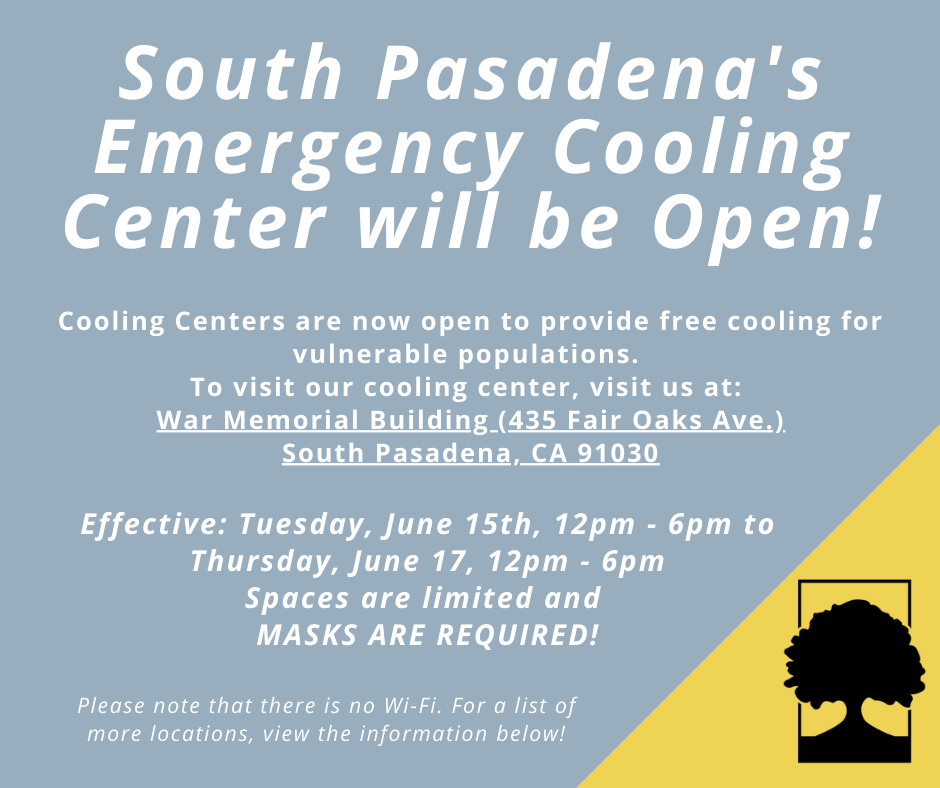
A Cooling Center will be open at the War Memorial Building (435 Fair Oaks Ave. SP, CA 91030) from Tuesday June 15 – Thursday June 17. The Center will be open 12pm to 6pm. Please note that the Cooling Center has limited seating. For questions please call 626-403-7380 or 626-403-7360.

Please note that the facility does not have WIFI, and MASKS ARE REQUIRED.

Other cooling center sites can be found at:
• Crowell Library – San Marino
1890 Huntington Drive, San Marino, CA 91108

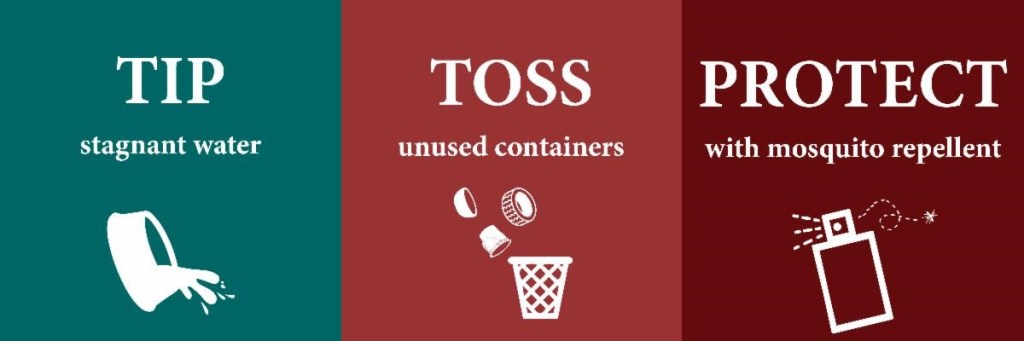
The first indication of West Nile virus circulating in Los Angeles County in 2021 was detected in a dead crow collected in South Pasadena, the San Gabriel Valley Mosquito & Vector Control District (SGVMVCD) announced Monday, June 7, 2021.   West Nile virus (WNV) is spread to people through mosquito bites. Birds can become sick from WNV, but do not spread the virus directly to people.   Mosquitoes in Southern California are generally more active from May to October. Mosquito control is a responsibility shared by all residents, businesses and property owners.   For more information, or to report neglected swimming pools of stagnant water, visit www.SGVMosquito.org or call 626-814-9466.

6/14/2021

A Flex Alert is typically issued in the summer when extremely hot weather pushes up energy demand as it reaches available capacity. This usually happens in the evening hours when solar generation is going offline and consumers are returning home and switching on air conditioners, lights, and appliances. As temperatures are beginning to rise we anticipate Flex Alerts to be issued .

During a Flex Alert, energy conservation is critical to reduce stress on the grid and can help prevent rotating rower outages . Additionally, Conserving energy, natural gas, and water can save money and help protect our natural resources.

Residential energy saving tips:

Adjust your thermostat 

  • During the summer, especially when you are not home, set your thermostat to 78 degrees or higher. Increasing your air conditioner 7 to 10 degrees 8 hours a day can save up to 10 percent on cooling costs.
  • During the winter, lower your furnace thermostat 3 to 5 degrees, if health permits.
  • Use smart or programmable thermostat features to help maintain energy savings when you are not home. Consumers who use programmable thermostats can save up to 10 percent annually on heating and cooling costs.

Windows and doors

  • Keep windows and doors closed to prevent the loss of cooled or heated air.
  • On summer nights, open windows to let cooler air in when safe. In the morning before the day starts to heat up, close windows and blinds to keep the sun from heating up your home.
  • During the summertilt blinds up and close drapes and shades on windows that receive direct sunlight.
  • During the winteropen window coverings to allow the direct sunlight to heat rooms.

Adjust temperature with ceiling fans 

  • During the summerusing your ceiling fan while your air conditioner is on will allow you to raise your thermostat about 4 degrees and maintain the same level of comfort. Switch off ceiling fans when you leave the room. Also, adjust your ceiling fans to run counter clockwise to push cool air down.
  • During the winter, ceiling fans should run at a low speed in a clockwise direction to gently draw room air up and force warm air down.

Smart energy use 

  • Turn off unnecessary lights, and use task or desktop lamps with LEDs instead of overhead lights.
  • Enable the “power management” setting on all computers and turn off when not in use.
  • Unplug phone chargers, power strips (those without a switch) and other equipment when not in use. The US Department of Energy estimates you can save $100 a year by unplugging devices that draw energy when they are in standby mode.
  • Avoid charging electric and plug-in hybrid vehicles between 4 p.m. and 9 p.m., instead, charge overnight.

Major appliance use 

  • In the summerpostpone using heat-producing appliances like the oven, dishwasher, clothes washer, and dryer until cooler times of the day to avoid heating up your home.
  • Run your dishwasher, clothes washer and dryer only when full. During summer, defer use of these and other major appliances to before 4 p.m. or after 9 p.m.
  • When possible, wash clothes in cold water. About 90 percent of the energy used in a clothes washer goes to water heating.
  • Consider hanging your clothes outside to dry to save energy.

Clean or replace your filters

  • A dirty filter forces your air conditioner and furnace to work harder, wasting money and energy.

Inspect your home for air leaks

  • Caulk or seal around air vents, registers, doors and windows. Pay close attention to the connections where vents and registers meet floors, walls and ceilings, as these are common places for leaks.

Adjust your water heater

  • Turn your water heater down to 120 degrees or the “normal” setting when home, and to the lowest setting when away. Water heating accounts for about 13 percent of home energy costs.

Head somewhere cool

  • On hot afternoons, consider going somewhere cool like the community pool, library or a community-cooling center. But before you leave, remember to adjust your thermostat.

Utility programs

  • Contact your electric utility for more energy-saving tips, and check for rebates to help reduce your energy use and monthly costs by adding more insulation, upgrading the heating and air conditioner, or replacing the pool pump.

6/14/21

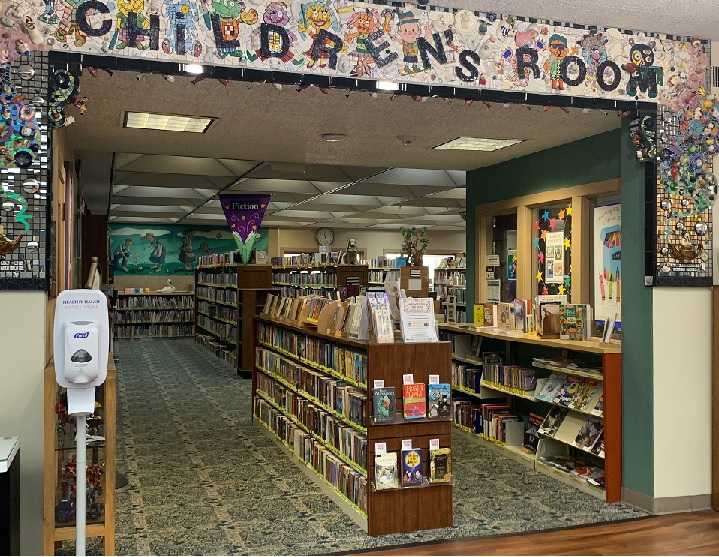
The Summer Reading Program is in full swing, with more than 300 readers registered in the first week, who have already read for a total of 866 hours. The Children’s Room also got an upgrade with new shelving for fiction paperbacks that replaces old, bulky spinning racks, making the entry to the space more open and inviting. Since the library building reopened to the public on May 17th, borrowing of children’s materials has increased 156%, with 6,950 items checked out in 22 days. Contact: Cathy Billings.

6/11/21